
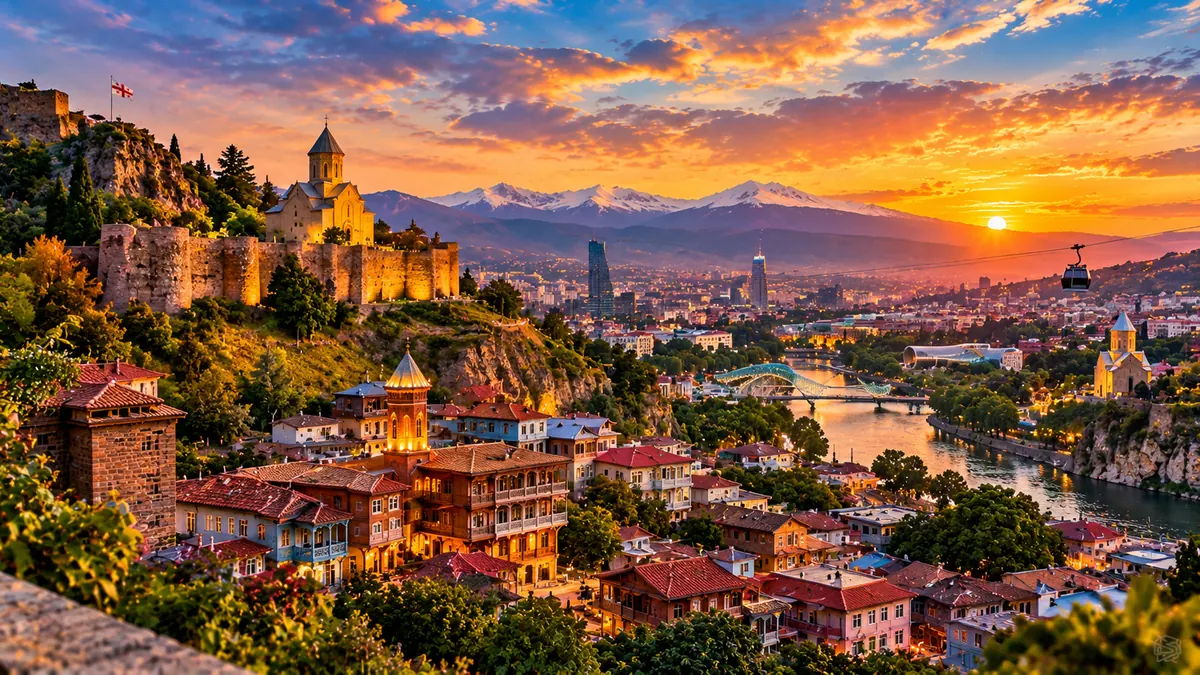
Tbilisi is easy-going and great value. Wander the Old Town, soak in the sulphur baths, and take day trips to wine country, the mountains and ancient monasteries.
- Currency
- Georgian lari (GEL)
- Language
- Georgian; Russian and English common
- Plugs
- Types C and F
- Time zone
- GMT+4
Best time to visit
May to June and September to October for warm days and cool evenings; autumn is grape harvest season. July and August are hot; winter is cold but good for nearby ski resorts.
Where to stay
- Old TownClose to Narikala Fortress, the sulphur baths and the restaurants of Kote Afkhazi Street.
- SololakiHistoric houses and quiet streets near Freedom Square.
- Rustaveli and VeraTheatres, museums and cafés along the main avenue.
- VakeLeafy and upmarket, near Vake Park, with modern hotels.
From the airport
Tbilisi International (TBS) is about 20 to 30 minutes from the centre by road. Taxis and ride-hailing apps are easy; a city bus also runs to the centre.
Getting around
The two-line metro, buses and ride-hailing apps are cheap. The Old Town is best on foot, and a cable car climbs from Rike Park to Narikala Fortress.
Don't miss
- Narikala Fortress and the cable car
- The Abanotubani sulphur baths
- Holy Trinity Cathedral (Sameba)
- The Dry Bridge market
- A day trip to Mtskheta or the Kakheti wine region
Good to know
- Women should cover their heads and wear skirts in churches; scarves are often available at the door.
- Georgian hospitality is generous: toasts at a supra (feast) are part of the culture.
- Have some cash in lari for small shops and markets.
- Wear comfortable shoes: the Old Town is hilly with uneven streets.
Plan your trip
Last reviewed October 2026. Rules and timetables change: check official sources before you travel.